
September 2025
Authors: Yodit Kebede and Karin Ulmer
As the European Union prepares for negotiations on its Multiannual Financial Framework (2028–2034), a critical window opens to align agricultural, environmental, social and international cooperation strategies. A new study “Assessment of EU support to Agroecology in 5 African countries: Senegal, Burkina Faso, DRC, Uganda, Kenya” investigates EU’s support to agroecology and provides concrete recommendations to realise the transformational potential of EU’s development support to agroecological transitions of food systems.
The report, commissioned by a consortium of European and African civil society organisations, examines the factors influencing EU and EU delegations’ support to agroecological transitions. It does so by analysing policy trends, funding flows, and the role of EU Delegations (EUDs), especially in light of the European Commission’s evolving priorities for the 2024–2029 period.
This study assessed the EU Official Development Assistance (ODA) allocated to agriculture within the total EU ODA for Sub-Saharan Africa (SSA). It highlights the growing recognition of agroecology in EU development policies and budgets, which is essential for building resilient, equitable, and sustainable food systems in Africa. However, the lack of clear, binding EU guidelines and direct financing channels risks incoherent and ineffective implementation.
The document is accompanied by a policy brief which provides concrete recommendations for realising the transformational potential of the EU’s development support for the agroecological transition of food systems.
| Key Recommendations: For EU Institutions: Establish the agroecology framework and the operational guide on mainstreaming to protect agroecology within the paradigmatic shift of Global Gateway. This should build on the HLPE 13 agroecological principles with clear enforceable criteria and mandate the use of the Agroecology Coalition finance assessment tool. For EU Delegations: Open direct funding channels for local CSOs through national financing windows favouring grassroots CSO platforms while adapting implementing modalities and removing all barriers to their full participation. For EU & African Governments: Focus interventions on transformative elements of agroecology aiming at deeper system shifts in governance and market relations in EU value chain funding and introduce non-negotiable red lines such as the ban of agrotoxics exports. |
Additional information
- This assessment has been commissioned by ActionAid, the Alliance for Food Sovereignty in Africa (AFSA), Broederlijk Delen, Caritas Africa, Caritas Europa, CIDSE, DanChurchAid, Dreikönigsaktion der Katholischen Jungschar (DKA Austria), Eastern and Southern Africa Small-Scale Farmers Forum (ESAFF); Entraide et Fraternité and Misereor. The views expressed in this report are those of the authors and do not necessarily reflect the position of the commissioning organisations.
- The research and the policy brief were officially launched in Brussels on 23rd September 2025. The event, hosted by MEP Marit Maij (S&D), brought together EU decision-makers, representatives of African governments and civil society.
Contacts:
– CIDSE: Emmanuel Yap, Food and Land Officer (yap(at)cidse.org)
– Broederlijk Delen: Suzy Serneels, Food Systems Policy Officer (Suzy.Serneels(at)broederlijkdelen.be)
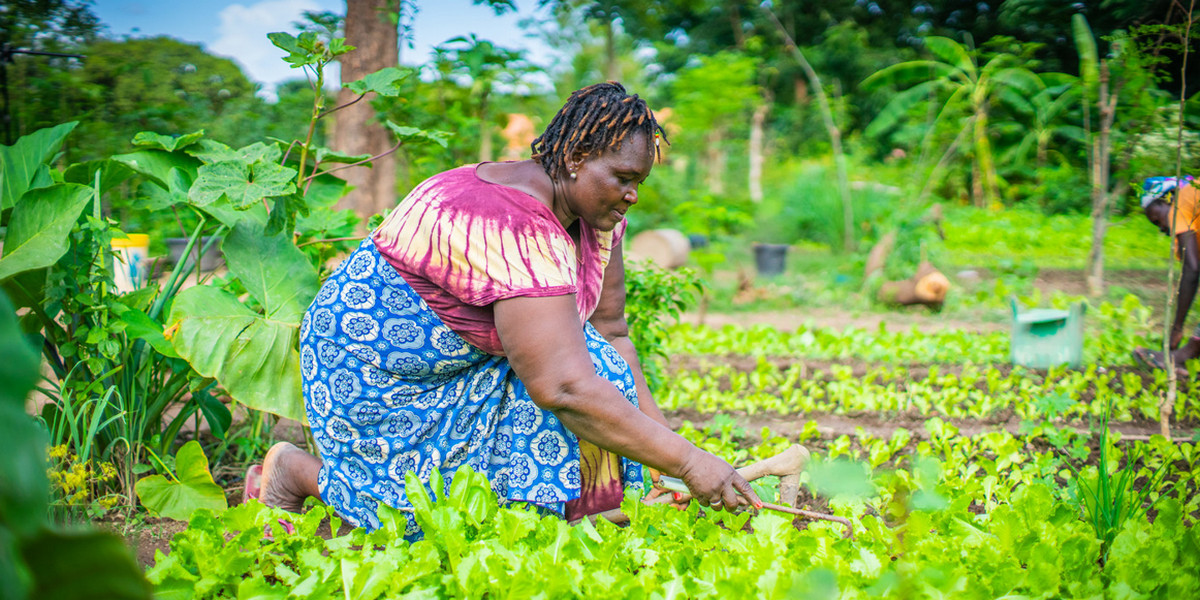
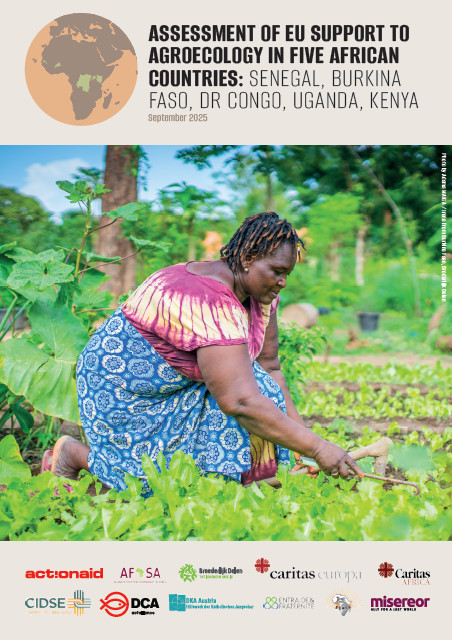
Cover photo: Irene from Burkina Faso. Credit: Adama MAIGA, Broederlijk Delen