The Nigrizia Foundation – set up by the Comboni Missionaries in Italy, with whom CIDSE collaborates closely – highlights the case of Sudan in their contribution to the European Commission’s public consultation on the Corporate Sustainability Due Diligence Directive. Below is an English translation of the article originally published in Italian on 13 July 2026. The views expressed are those of the authors.
European due diligence: Fondazione Nigrizia brings the Sudan case to the European Commission consultation on the Guidelines for the Corporate Sustainability Due Diligence Directive.
Fondazione Nigrizia, a foundation established by the Comboni Missionaries in Italy, has participated in the open public consultation launched by the European Commission to develop the implementation guidelines for the Corporate Sustainability Due Diligence Directive (Directive (EU) 2024/1760 – CSDDD).
The consultation represents an important step toward making the Directive more effective and practically enforceable. The legislation is the result of years of advocacy by civil society organizations across Europe and the Global South, which called for stronger rules governing large Non-EU and EU companies within the scope of application[1]. All too often, human rights and environmental abuses occurring in the early stages of global supply chains remain invisible throughout production processes and ultimately become embedded in products sold in Europe as though they were fully sustainable.
In recent months, however, the regulatory framework has been significantly weakened. Through the so-called Omnibus simplification package, the European Commission has proposed a major simplification of corporate sustainability legislation, with the stated objective of enhancing the competitiveness of European businesses. Among the most controversial changes is a drastic reduction in the number of companies subject to due diligence obligations, limiting them to much larger corporations than originally envisaged by the Directive, together with a relaxation of several monitoring requirements throughout the value chain.
For this reason, given the transposition phase that the Directive is entering, civil society organizations continue to call for the Directive to retain its capacity to prevent and address corporate abuses. Likewise, to facilitate compliance, the European Commission is legally obligated to issue comprehensive guidance and voluntary model contractual clauses. The primary set of general due diligence guidelines must be published by July 26, 2027, giving businesses a clear blueprint ahead of national enforcement deadlines. This is the reason why the Commission opened a public consultation addressed to businesses, CSOs, affected communities, and other relevant stakeholders. The public consultation provides an important opportunity to contribute to implementation guidelines that will ensure the legislation remains genuinely effective. One specific section of the consultation focuses on Conflict-Affected and High-Risk Areas (CAHRAs).
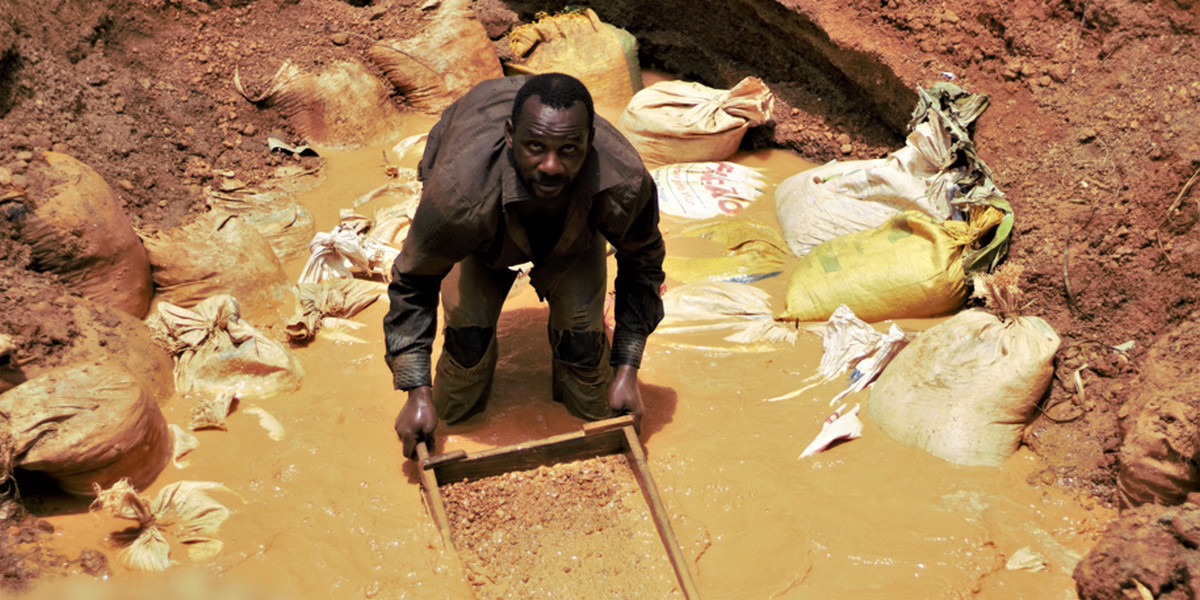
Within this framework, Fondazione Nigrizia ETS has drawn the Commission’s attention to the case of Sudan, highlighting the link between the ongoing war, the country’s devastating humanitarian crisis, and the illicit gold trade.
According to the Foundation, gold has become the principal source of financing for the parties involved in the conflict. Much of Sudan’s gold production leaves the country through smuggling networks and opaque trading channels, passing primarily through the United Arab Emirates (UAE), where the metal’s origin is often effectively “laundered” before being re-exported to international markets, including the European Union.
Under these circumstances, limiting due diligence obligations to direct suppliers is clearly inadequate. Gold supply chains originating in conflict zones typically involve multiple intermediaries, trading companies, and refining hubs, making it extremely difficult to trace the mineral back to its source. Furthermore, discrepancies between export and import statistics indicate that a substantial share of Sudanese gold leaves the country without any official record, while large volumes of illicitly sourced African gold continue to enter global supply chains.
For this reason, Fondazione Nigrizia calls on the European Commission to ensure that the future implementation guidelines classify as high-risk areas not only countries affected by armed conflict but also the major transit, refining, and trading hubs for gold, including the United Arab Emirates and, where appropriate, Turkey, India, and Hong Kong.
The Foundation also recommends introducing new risk indicators (“red flags”) to help companies identify high-risk supply chains, including:
- Significant discrepancies between export and import statistics, indicating systematic smuggling;
- Persistent lack of transparency and traceability throughout the supply chain;
- Weak customs controls and ineffective independent verification systems;
- Gold markets relying predominantly on cash transactions and operating under limited regulatory oversight;
- Evidence that revenues from the mineral trade finance armed groups or military actors;
- Documented inability of public authorities to prevent and combat illicit mineral flows.
Finally, Fondazione Nigrizia emphasizes that gold requires a distinct due diligence approach compared to other conflict minerals such as tin, tantalum, and tungsten (the so-called 3T minerals). The principal risks do not lie primarily at mining sites but rather in the subsequent stages of refining, trading, and laundering the origin of the metal. For this reason, the European Union should establish a gold-specific due diligence regime capable of strengthening oversight of refineries, trading hubs, and downstream gold products, complementing—rather than replacing—the existing EU Conflict Minerals Regulation.
Contact for additional information: Fr. Dario Bossi, Fondazione Nigrizia (dario.bossi(at)fondazionenigrizia.it)
Cover photo credit: Marco Simoncelli, Archivio Nigrizia
[1] CSDDD applies directly to large EU and non-EU companies meeting specific employee and turnover thresholds, such as having over 1,000 employees and €450 million in revenue.