
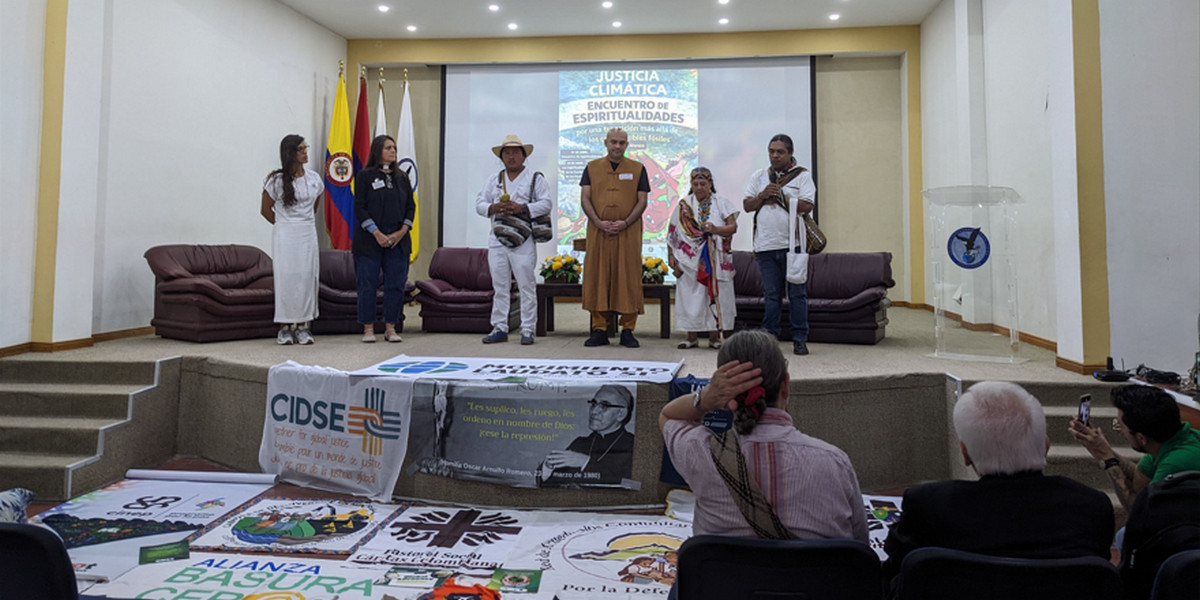
CIDSE’s contribution to Strengthening the faith voice in the transition away from fossil fuels
In April 2026, governments, civil society organisations, researchers, Indigenous Peoples, faith leaders and community representatives gathered in Santa Marta, Colombia, for the first International Conference on Transitioning Away from Fossil Fuels (TAFF). Announced at the closing of the COP30 in Brazil, the conference, co-hosted by Colombia and the Netherlands, aimed to turn the commitment made at COP28 to transition away from fossil fuels into concrete action.
As an international family of Catholic social justice organisations, CIDSE engaged in the process to ensure that faith communities contribute to shaping a just, equitable and people-centred transition. For CIDSE, Santa Marta was an opportunity to connect faith voices with a growing coalition of governments, civil society actors and communities committed to moving beyond coal, oil and gas.
In the lead-up to the conference, CIDSE held meetings with the Colombian and Dutch officials responsible for preparing the Conference to gain a better understanding of the process, share our ideas, and explore how faith-based organisations could participate more meaningfully. We also mobilised Catholic organisations, facilitated exchanges with global faith networks and supported the development of a common faith-based call for a just transition away from fossil fuels.
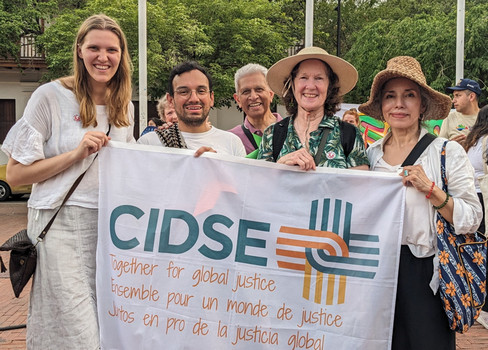
During the conference, CIDSE worked alongside CELAM, Cáritas Colombiana, the Diocese of Santa Marta, the World Council of Churches, Laudato Si’ Movement, SICSAL and others to coordinate faith-based engagement, strengthen Catholic and ecumenical collaboration, and amplify the experiences of communities already affected by fossil fuel extraction and climate change. This included the organisation of a mass for the Care of Our Common Home and for Climate Justice.
Santa Marta confirmed the growing international momentum behind efforts to move beyond fossil fuels. Key outcomes included the launch of the Santa Marta Vision that includes 10 principles for the transition, the launch of follow-up workstreams on implementation, and the announcement that Ireland and Tuvalu will co-host the next phase of the process and the second Just Transitioning Away from Fossil Fuels (JTAFF) conference in 2027. For CIDSE, one of the main lessons from Santa Marta was that the transition away from fossil fuels is not only a political, technical or economic challenge. It is also a moral imperative rooted in care for creation, justice and solidarity with communities on the frontlines of the climate crisis.
The conference in Colombia highlighted the unique contribution that faith communities can make through their global reach, local presence and commitment to the common good. At the same time, Santa Marta demonstrated the importance of ensuring that faith-based organisations remain actively involved in shaping future discussions and decisions. Strengthening and formalising the participation of faith actors in the evolving TAFF process will be essential in the years ahead.
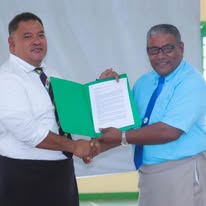
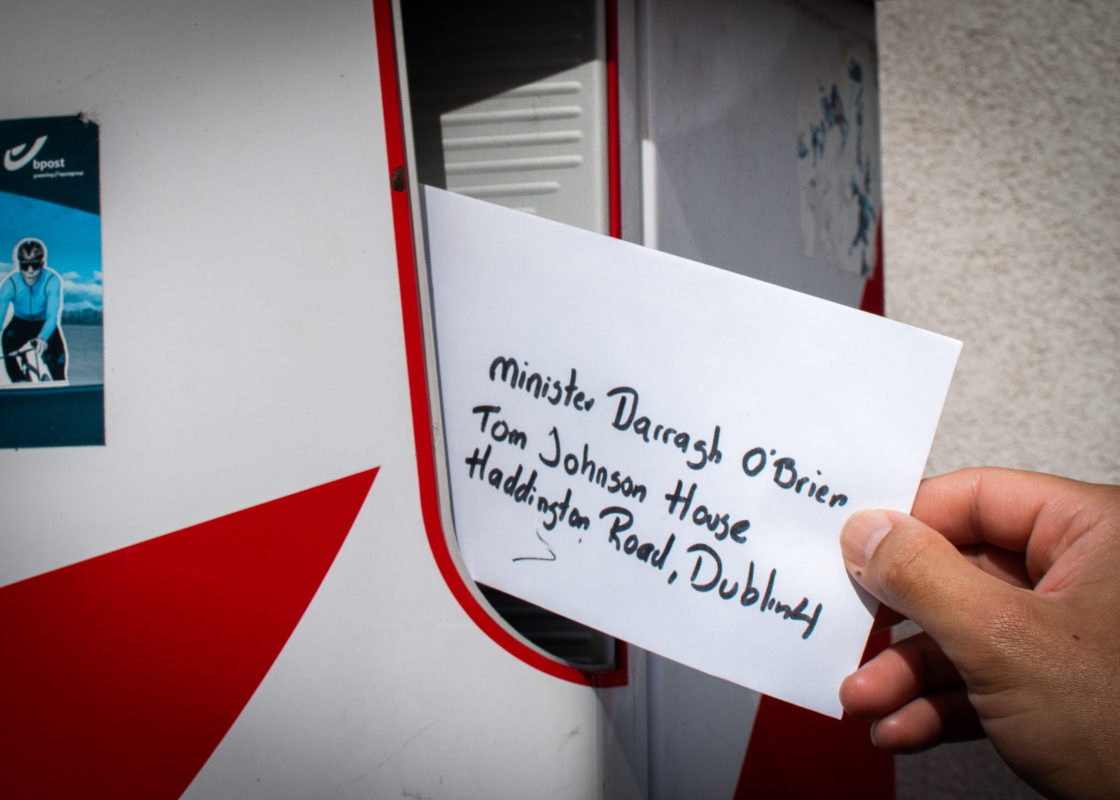
| With the support of CIDSE, more than 66 faith-based organisations worldwide, urge Tuvalu and Ireland, co-hosts of the Second Conference on a Just Transition Away from Fossil Fuels (TAFF2), to formally recognise faith-based organisations as part of the official civil society constituency participating in the lead-up to the conference. In September 2026, an open letter was presented to Tuvalu Minister, Dr. Maina Talia and to Irish Minister, Darragh O’Brien TD. |
Together with Catholic, ecumenical and interfaith partners, CIDSE is now helping to build momentum towards the next conference in Tuvalu. This includes supporting dialogue with the governments of Ireland and Tuvalu, strengthening collaboration with regional bishops’ conferences, Global Catholic organisations such as Caritas Internationalis and the Laudato Si’ Movement, and contributing to discussions linking the TAFF process in 2027 with COP31 and future UN climate negotiations.
Inspired by Catholic Social Teaching and the Gospel, CIDSE will continue to work with faith-based communities, civil society organisations and governments to strengthen faith engagement and ensure that the transition beyond fossil fuels is fast, fair and centred on people and planet.
TIMELINE AND NEXT STEPS
January-April 2026
Building Momentum
CIDSE mobilises and facilitates dialogue with Catholic organisations and interfaith-based partners.
24-29 April 2026
First TAFF Conference, Colombia
A CIDSE delegation is present in Santa Marta and active in a series of activities with allied organisations. Ireland and Tuvalu are announced as co-hosts of the next phase.
13 May 2026
From Santa Marta to Tuvalu
CIDSE webinar on pathways, opportunities and next steps for Catholic actors.
8 June 2026
UNFCCC climate negotiations, Bonn
CIDSE official side event on Santa Marta and Beyond: Delivering on the TAFF Roadmap.
9-21 November 2026
COP31, Antalya, Türkiye
CIDSE official side event on 18 November with representatives from Tuvalu and Ireland with faith leaders to discuss the contributions of faith-based organisations to a just transition.
2027
Preparing the Road
Pre-Conference meeting, Ireland
Dialogue, coalition-building and preparatory events
for the JTAFF2 conference.
July 2027
Second JTAFF Conference, Tuvalu
Advancing a just transition beyond fossil fuels that puts people, communities and the planet at its centre.
More info here.
Additional resources:
Manifesto of the Churches of the Global South for our Common Home: Towards peace with creation: an urgent call for’ a just transition beyond fossil fuels’.
(EN – ES – FR – IT – PT).
CIDSE contacts:
Lydia Machaka, Energy and Extractivism Policy Officer, machaka(at)cidse.org
Pedro Guzmán, Energy and Extractivism Policy Officer, guzman(at)cidse.org (until 1st October)
Photos:
Cover photo: Faith-based organisations meeting in Santa Marta, April 2026. Credit: CIDSE.
Photo 1: CIDSE delegation in Santa Marta, April 2026. Credit: CIDSE.
Photo 2: Handover of faith-based organisations letter to Tuvalu Minister, Dr. Maina Talia by Rev. Alamatiga Lusama, Secretary General of the Christian Church of Tuvalu and the Pacific Conference of Churches. Credit: Pacific Conference of Churches.
Photo 3: Mailing of faith-based organisations letter to Irish Minister, Darragh O’Brien TD. Credit: CIDSE.