
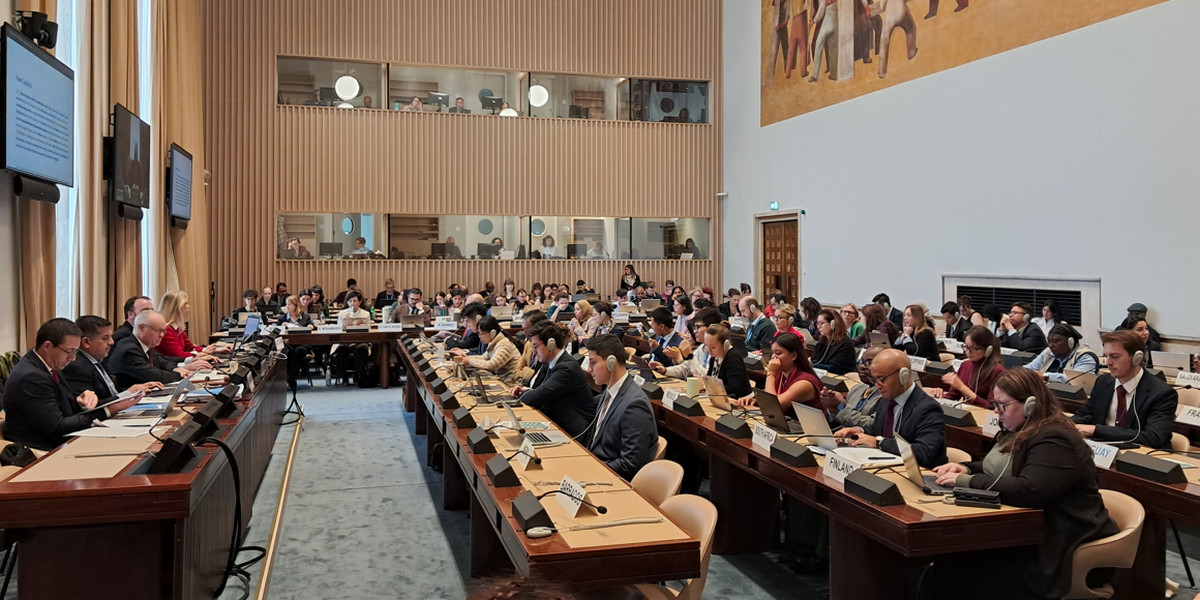
The 12th session of the Open-ended Intergovernmental Working Group (OEIGWG) on transnational corporations (TNCs) and other business enterprises (OBEs) with respect to human rights held in Geneva from 12 to 16 October, took place at an important juncture for this UN Treaty process. The session confirmed that the process has gained significant momentum and is now approaching a decisive phase. The forthcoming revised draft, expected in early 2027, and the intersessional work that will follow will be critical in determining whether this momentum can translate into a meaningful and effective international instrument capable of addressing corporate impunity.
CIDSE participated with a strong delegation bringing together members and partners from different regions and perspectives. The delegation included representatives from Trócaire, Misereor, CCFD-Terre Solidaire, Broederlijk Delen, Manos Unidas and DKA Austria, as well as partners from Brazil, including Clínica de Direitos, and from Guatemala, including COPAE, CPO and the Xinka Parliament. We also had the invaluable support of members who were unable to attend the session in person, like Fastenaktion, which contributed to our collective advocacy throughout the week.
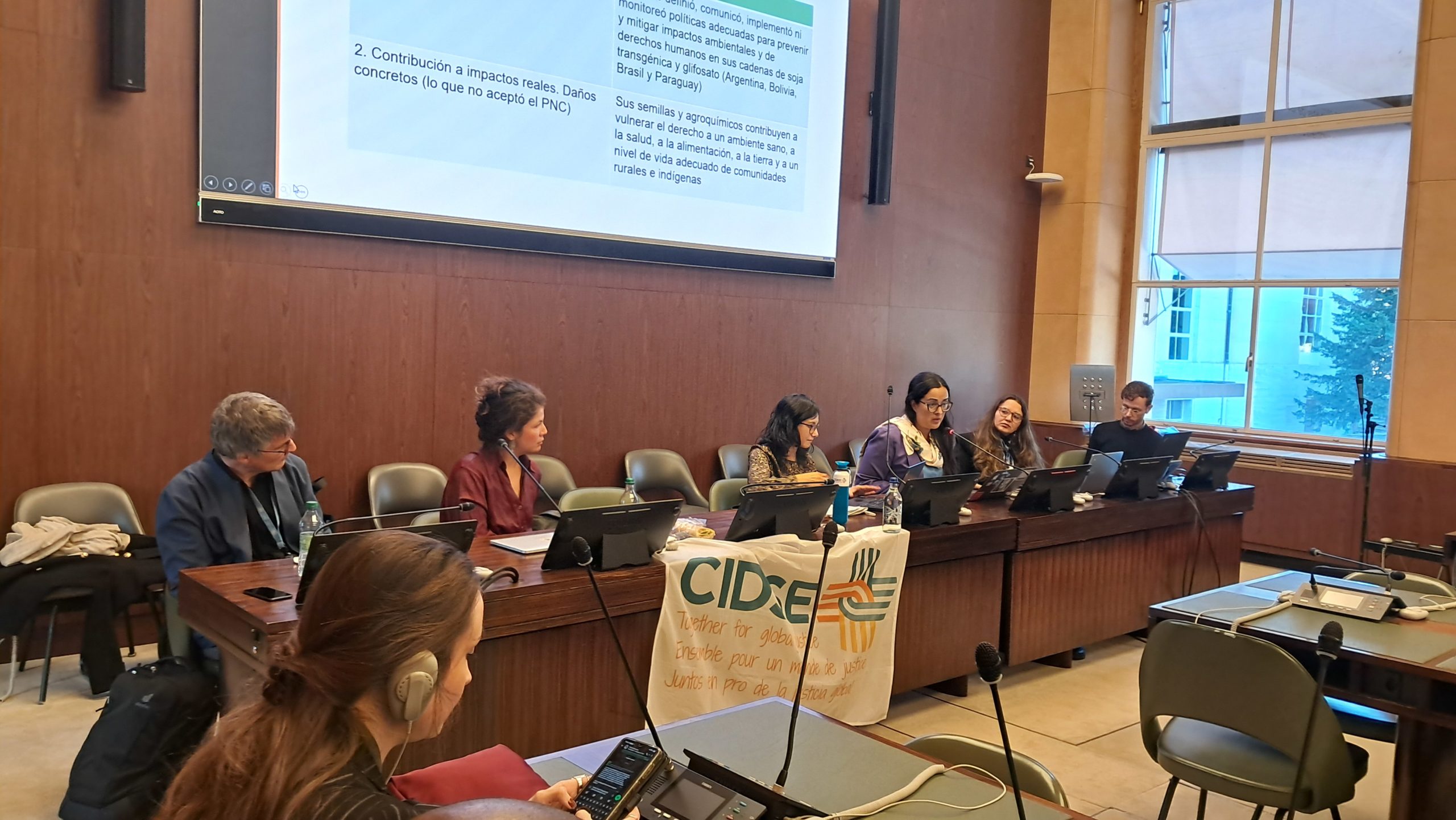
As part of our engagement, CIDSE presented a General Statement and 14 oral statements responding to the Chair-Rapporteur’s proposals and highlighting key priorities for an ambitious and effective LBI. We also organised a side event, “Accountability in Global Value Chains: Legal Responsibilities of States and Corporations in Addressing Harm from Pesticides“, bringing together affected communities, civil society organisations and other stakeholders to discuss concrete experiences of corporate harm and pathways towards greater accountability.
A process with momentum, but an uncertain political destination
The leadership of the current Chair-Rapporteur, supported by the contributions of legal experts and the intersessional consultations, has helped maintain momentum and advance the process. The Chair’s Office is now preparing a revised draft, which is expected to be officially published in early 2027.
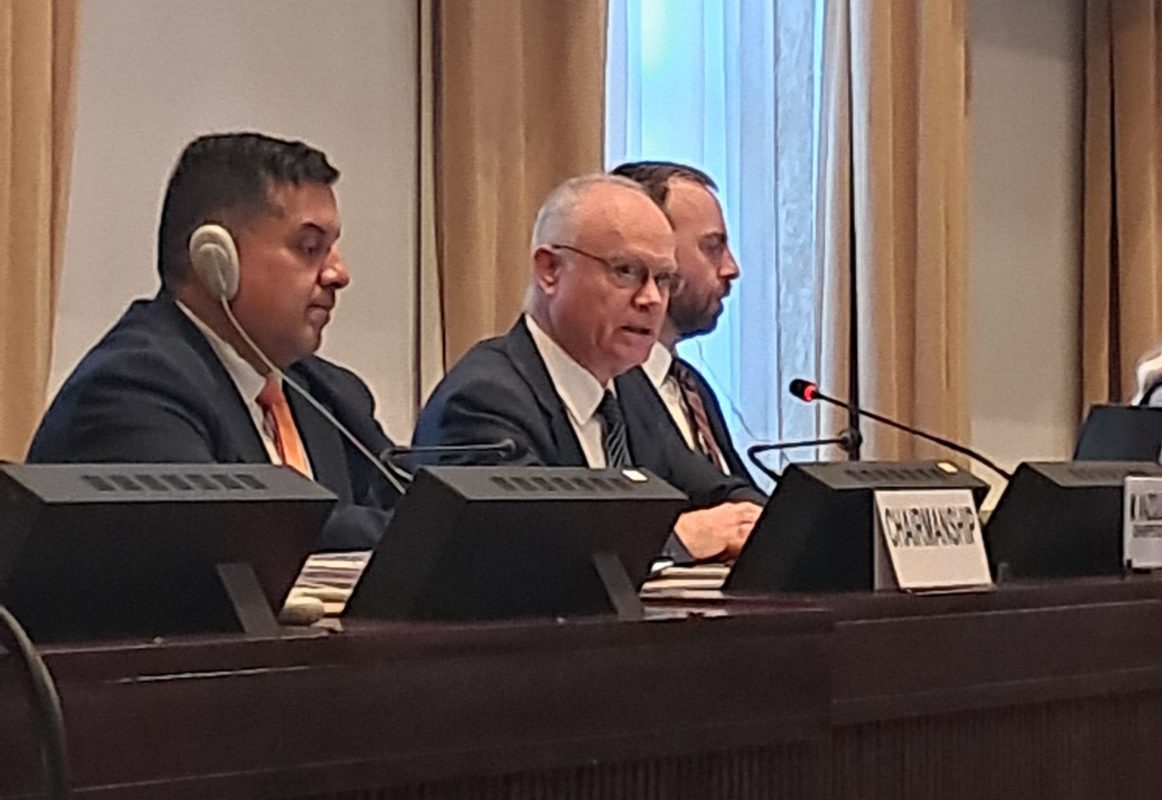
This will be followed by intersessional work between May and July 2027, providing an opportunity to consider the text as a whole and further build convergence among States.
At the same time, the session highlighted the importance of continuing to strengthen States’ political engagement as the process moves into its next phase. Participation remained broadly comparable to previous years, with a significant number of States present throughout the session and several new and returning voices contributing to the discussions. While not all States intervened in the negotiations, their presence signals continued interest in the process. The next phase provides an important opportunity to build on this engagement, bringing more States into substantive discussions and ensuring that national delegations are equipped with the political mandate needed to advance towards consensus on an ambitious and effective instrument.
Political engagement must match the seriousness of the process
The forthcoming phase will require States to engage at the appropriate political level. In the closing remarks by Civil Society Organisations (Treaty Alliance, Global Campaign, Feminists for a Binding Treaty and ESCR-Net), the Chair’s Office was encouraged to send a diplomatic note to States’ ambassadors highlighting the importance of ensuring that their representatives participating in the negotiations have the necessary mandate and authority to negotiate and, where possible, reach agreement on the provisions under discussion.
Without stronger political engagement, there is a risk that negotiations will remain at a predominantly technical level. States should recognise that this is a serious process with the potential to address significant gaps in international law that continue to allow transnational corporations and other business enterprises to operate with impunity.
Civil society and affected communities at the heart of the process
The session once again demonstrated the essential role of civil society in keeping the Legally Binding Instrument (LBI) process ambitious and grounded in the realities of affected communities and victims.
Despite unprecedented funding pressures affecting many organisations, civil society maintained a strong and constructive presence through substantive interventions in the negotiations, high-quality side events, and extensive engagement with State delegations. For instance, the side event “Accountability in Global Value Chains: Legal Responsibilities of States and Corporations in Addressing Harm from Pesticides” organised by CIDSE, Misereor, Fastenaktion, ECCHR, CELS and Terra de Direitos brought together affected communities, civil society organisations and policymakers to highlight concrete experiences of corporate harm and the need for effective legal accountability and remedy.
Most importantly, the voices of people directly affected by corporate abuses continue to provide the clearest justification for the LBI. Their testimonies, experiences and demands demonstrate the very real human and environmental consequences of corporate impunity and should continue to inform and guide the negotiations. Ensuring their meaningful participation throughout the next stages of the process will be essential to developing an instrument that responds to the realities of those it is ultimately intended to protect.
The next phase: substance, participation and political commitment
The 12th session leaves the LBI process at a critical crossroads. The priority should be to ensure that the next phase consolidates rather than dilutes the progress made so far. This requires:
- A new draft that meaningfully strengthens corporate accountability and closes existing gaps in international law;
- Early and meaningful access for civil society and affected communities to the draft;
- An inclusive and effective methodology for the 13th session and the intersessional work;
- Meaningful participation of affected communities and civil society throughout the next phase;
- Stronger political engagement by States, including the participation of representatives with the mandate necessary to negotiate;
- Continuity in the leadership and institutional support of the process; and
- Sufficient time to address substantive differences, while avoiding unnecessary delays that could undermine the LBI process.
The objective should ultimately be substance over speed, but also substance over indefinite delay. The OEIGWG on TNCs and OBEs has reached a point where both political commitment and sustained engagement by States will be essential to ensure that the next draft becomes a genuine basis for negotiations capable of delivering an effective instrument for preventing corporate abuses, ensuring accountability and providing remedy to those affected.
CIDSE contact: Susana Hernández Torres, Corporate Regulation Officer (hernandez(at)cidse.org)
Cover photo: OEIGWG on transnational corporations and other business enterprises plenary session, Geneva, October 2026. Credit: Manos Unidas.