
In the past months, CIDSE organised two virtual Systemic Change Dialogues, bringing together global faith actors, grassroot communities, indigenous peoples and broader civil society to reflect and dive deeper into the current climate crisis from a systemic perspective and to open our hearts and minds as we journey(ed) towards COP30, the UNFCCC climate change conference and the Peoples’ Summit in Brazil. With 2025 marking the Jubilee Year, under the theme “Pilgrims of Hope,” we’ve been embarking on a collective journey of faith and a renewed moral and spiritual commitment to safeguarding our common home, with the dialogues serving as spaces of reflection and shared discernment along the way.
We gathered for a first dialogue on 9 July on the topic of “Reclaiming futures beyond extractive addiction and false solutions”, followed by a second one on 17 September on the topic of “Ecological and climate debt: Rooted in responsibility”. These dialogues were shaped in collaboration with CIDSE member organisations and allies from the Global North and the Global South [1]. Bringing together 157 participants from 44 countries across six continents [2], the dialogues were a space of encounter and shared hope, rejecting the dominant narrative that “It is too late and there is no hope to reverse this path we are on”.
Through the dialogues, we have received a wealth of wisdom — including powerful testimonials, from Nicolas Omonuk, a Ugandan Climate Justice Activist, Patricia Gualinga, a human rights and land rights defender from the Kichwa people of Sarayaku in the Ecuadorian Amazon, and Sister Laura Vicuña, an Indigenous leader from the Kariri People in Brazil – critical reflections, bold calls to action, and heartwarming messages of hope and solidarity.
This wisdom from all the participants has now been carefully gathered and captured into two key documents:

We hope that the Belém Manifesto, a collective Call to Action, directed primarily at governments and international institutions, can serve as a reminder of the urgent responsibility and concrete steps needed to address the climate crisis, and that this message will be carried into the negotiations and other spaces during COP30.

Alongside this, we share a Solidarity Message to activists, grassroots organisers, frontline communities and civil society participants travelling to Belém that can be a source of inspiration, courage, and strength as they engage in these spaces.
The Systemic Change Dialogues’ Call to Action will be presented at a special CIDSE 60th Anniversary event in Belém on 14 November where the next steps towards COP31 will be introduced.
Additional information
[1] The following organisations helped us co-shape the Systemic Change Dialogues:

[2] Algeria, Argentina, Belgium, Botswana, Brazil, Burundi, Cameroon, Canada, Colombia, Democratic Republic of the Congo, Ecuador, France, Germany, Ghana, Guatemala, Honduras, Ireland, Italy, Kenya, Lebanon, Madagascar, Malawi, Mali, Mozambique, Myanmar, New Zealand, Nigeria, Palestine, Philippines, Portugal, Russia, Rwanda, Singapore, South Africa, Spain, Switzerland, Tanzania, The Netherlands, Uganda, Ukraine, United Kingdom, United States, Zambia, Zimbabwe.
Contacts:
– Brussels: Nicky Broeckhoven, Systemic Change Officer (broeckhoven(at)cidse.org)
– Belém: Winnie Nalubowa, Systemic Change and Energy & Extractivism Volunteer (Nalubowa(at)cidse.org)
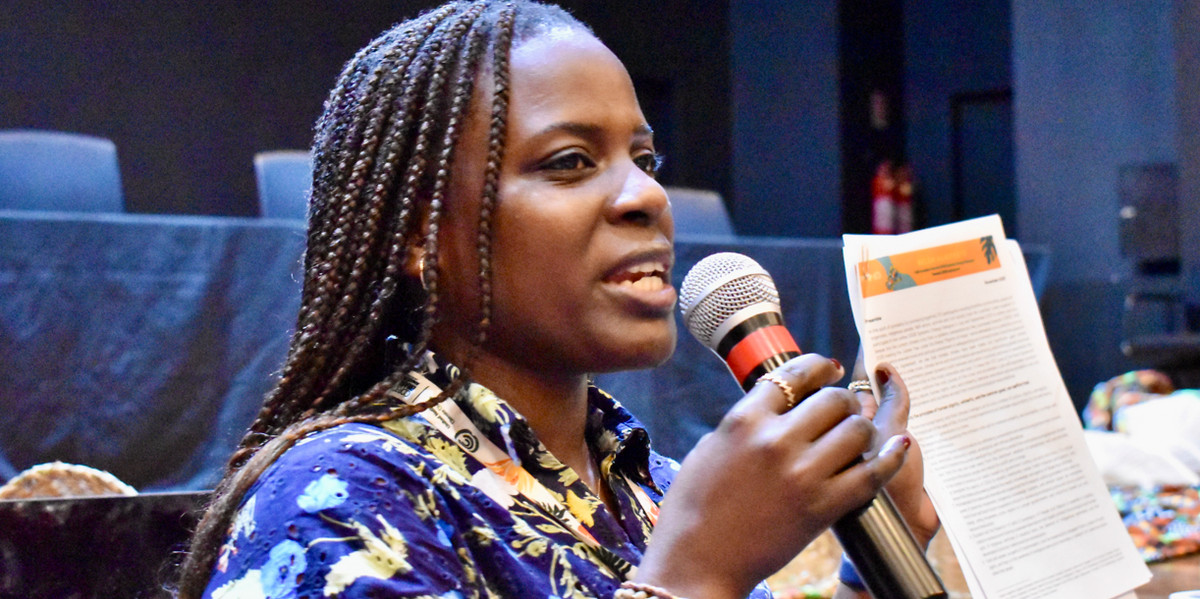
Cover photo: Winnie Nalubowa from CIDSE presenting the Belém Manifesto at an event in Belém. © CIDSE.