
18 May 2026
Statement by 186 civil society organisations, youth movements, Indigenous Peoples’ organisations, frontline community representatives, environmental justice advocates, legal experts, health and climate movements worldwide, calling for a strong UN General Assembly resolution endorsing the 2025 ICJ Advisory Opinion on climate change.
Background
On 20 May, governments at the United Nations General Assembly have the opportunity to vote on a resolution to implement the 2025 Advisory Opinion of the International Court of Justice on climate change. The Court’s message was unambiguous: climate obligations are not political aspirations. They are legal duties.
Read the Civil Society Statement:
The climate crisis is not merely an environmental emergency; it is a human rights crisis, a health crisis, a matter of justice, survival, and international law. At a moment when multilateralism faces profound strain, the upcoming United Nations General Assembly (UNGA) resolution welcoming the International Court of Justice (ICJ) Advisory Opinion on the legal obligations of States in respect of climate change represents a defining opportunity for global leadership and collective responsibility.
As civil society organisations committed to climate justice, international cooperation, and the rule of law, we urge all Member States to co-sponsor and vote in favor of the UNGA Resolution welcoming and operationalising the ICJ climate ruling.
The ICJ climate ruling constitutes the most authoritative clarification of international law on climate change to date. Delivered unanimously, following a consensus request and unprecedented participation from States and civil society across all regions, the Opinion confirms that States have binding legal obligations to prevent climate harm, protect human rights, phase out fossil fuels, and provide remedy and reparations for climate-related loss and damage.
The Resolution now before the General Assembly faithfully and responsibly reflects these obligations, and offers clear pathways for implementation. A single delegation did not shape the Resolution, developed through extensive consultations and shaped by the engagement of over one hundred Member States. The final draft is holistic and representative of Member States’ input. It affirms the importance of a just transition away from fossil fuels, recognizes the rights and legal protections of States threatened by sea-level rise, underscores the centrality of equity and intergenerational justice, and calls for structured follow-up to support implementation, including reporting by the UN Secretary-General.
Consensus adoption of this critical Resolution would send a powerful global message that States remain committed to climate action, international law, and multilateral cooperation at a time when humanity urgently needs all three.
As we look towards the date of adoption expected on 20 May 2026, we call on all Member States to:
- Confirm and publicly communicate about their co-sponsorship before the adoption day;
- Support adoption of the resolution by consensus, including through diplomatic engagement;
- Vote in favor of the resolution as presented, should a vote be called;
- Engage constructively in follow-up processes to operationalise the ICJ Advisory Opinion in line with their legal obligations.
As civil society, we stand ready to continue working with Member States and UN bodies to advance implementation of the Advisory Opinion, and to strengthen our collective capacity to enhance responses to the growing climate crisis. We welcome this resolution wholeheartedly and reaffirm our commitment to supporting its implementation and the operationalisation of the advisory opinion in a manner that upholds human rights, ensures equity and delivers justice in accordance with the findings of the ICJ.
The intensifying harm that the climate crisis wreaks on all our countries has already resulted in unacceptable human suffering, including immense loss and damage, severe health risks, displacement of civilians, threatened sovereignty and survival of entire countries, and more, leaving devastating repercussions for many, primarily communities that have contributed the least to climate change. For frontline communities, small island developing States, youth, and future generations, this resolution is not abstract political exercises, it is about dignity, existence, and survival.
The climate crisis does not have to be fought alone. Through continued collaboration and international cooperation, we can deliver true climate justice.
Co-sponsor the resolution and #VoteYesForClimateJustice.
Thank you.
CIDSE contact: Pedro Guzmán Pérez, Energy and Extractivism Officer (guzman(at)cidse.org)
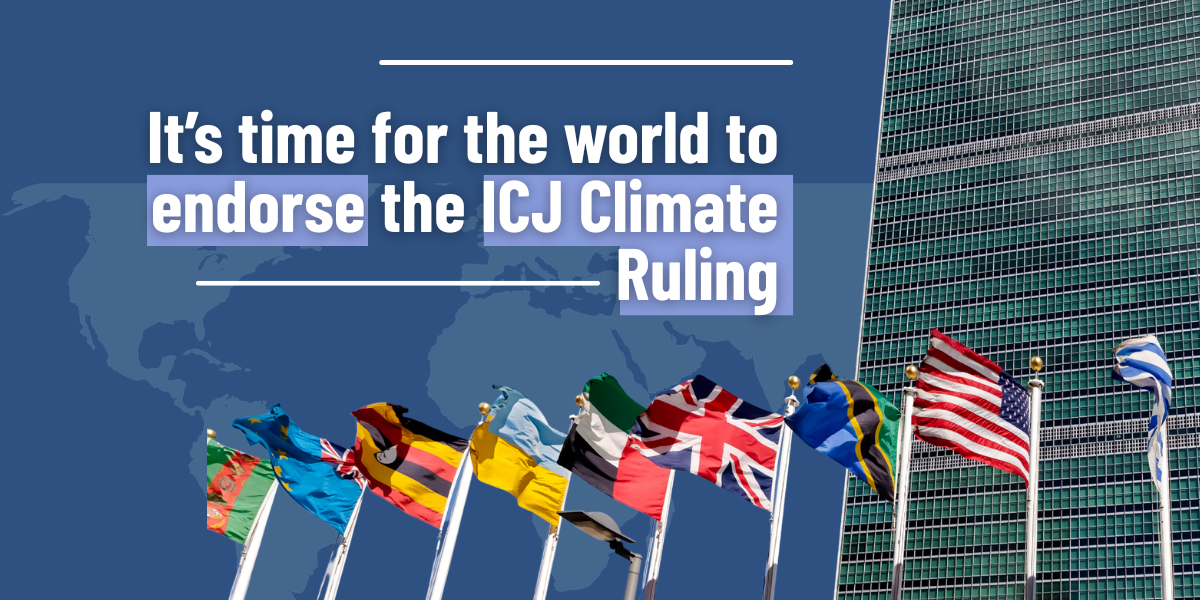
Cover illustration: visual with photo of the United Nations building in New York.
Credit: CANSA.