
Research Report and Policy Brief
September 2025
Authors: Priscilla Claeys, Chiara Razzano, Julie Kleemann and Ann Waters-Bayer
The research report is structured as follows:
– Section 1: Definition of pastoralism and why it is important
– Section 2: Main challenges for pastoralists in Eastern Africa
– Section 3: Vision for pastoralists’ future
– Section 4: How the EU and African states can support pastoralism
Key Report Messages:
- Pastoralism holds tremendous socio-economic significance while contributing to territorial and climatic resilience, ecological balance and cultural diversity. Yet pastoralism continues to be misunderstood and undermined. 2026 is the International Year of Rangelands and Pastoralists. Let’s support pastoralists!
- European policies and projects in the areas of biodiversity, nature conservation, agriculture, trade and climate change have a significant impact on pastoralism and on the human rights of pastoralists in Eastern Africa.
- We call on European institutions and policymakers to recognise, valorise, protect and support pastoralism. By investing in pro-pastoralist policies and programmes, European institutions can promote social and political stability, environmental resilience and economic inclusion in Eastern Africa.
- The livestock sector tends to be regarded negatively in national climate and biodiversity strategies. Livestock is seen as a major contributor to greenhouse gas emissions, as well as a cause of biodiversity loss via ecosystem degradation. The positive contributions of pastoralism to biodiversity and food security are not properly considered.
- We call on Eastern African countries to include pastoralism-based strategies in their national climate and biodiversity strategies.
- We identify 7 pro-pastoralist measures and call on the EU and Eastern African States to:
(1) Protect pastoralists’ lands and livestock mobility;
(2) Support food and water security and economic resilience;
(3) Invest in decentralised infrastructure development and ensure people-led service delivery in pastoral areas;
(4) Ensure socio-ecological and climate resilience;
(5) Enhance pastoralist institutions, voices and culture;
(6) Raise awareness and address negative stereotypes;
(7) Finance public research on pastoralism.
_____________________
Additional information:
- This research report is cosigned by four global networks: CELEP, MISA, AFSA and CIDSE. It is endorsed by the Eastern & Southern Africa (ESA) International Regional Support Group (IRSG) of the International Year of Rangelands and Pastoralists 2026. The scientific research included in this report was compiled by the four authors and coordinated by Priscilla Claeys from CAWR, Coventry University.
- The research report and the related policy brief were officially launched at an hybrid event in Brussels on 26 September 2025.
- From 17 September to 3rd October 2025, a Maasai delegation consisting of Joseph Oleshangay (Maasai human rights lawyer and activist), Nkasiogi Lekakeny (Maasai woman from Ngorongoro) and Naipanoi Ntutu (Maasai youth representative from Loliondo). is touring Austria, Germany Belgium and France. The delegation will present the Maasai vision of conservation and its contribution to their livelihoods, as well as to climate and biodiversity strategies.
- Presentation by Joseph Oleshangay, Maasai human rights lawyer and activist at the hearing on climate change and human rights of the Subcommittee on Human Rights ordinary meeting, European Parliament, Brussels, 25 September 2025. (Watch: 09:08:20-09:13:34).
Contacts:
- CIDSE: Emmanuel Yap, Food and Land Officer (yap(at)cidse.org)
- Corresponding Author: Priscilla Claeys (ac4203(at)coventry.ac.uk)
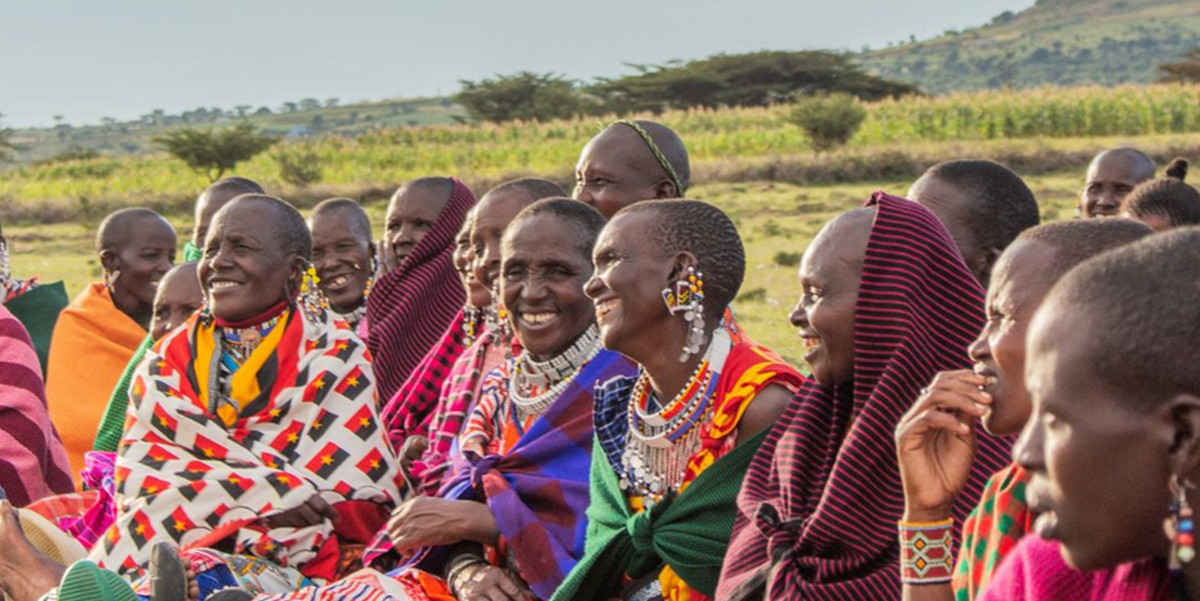
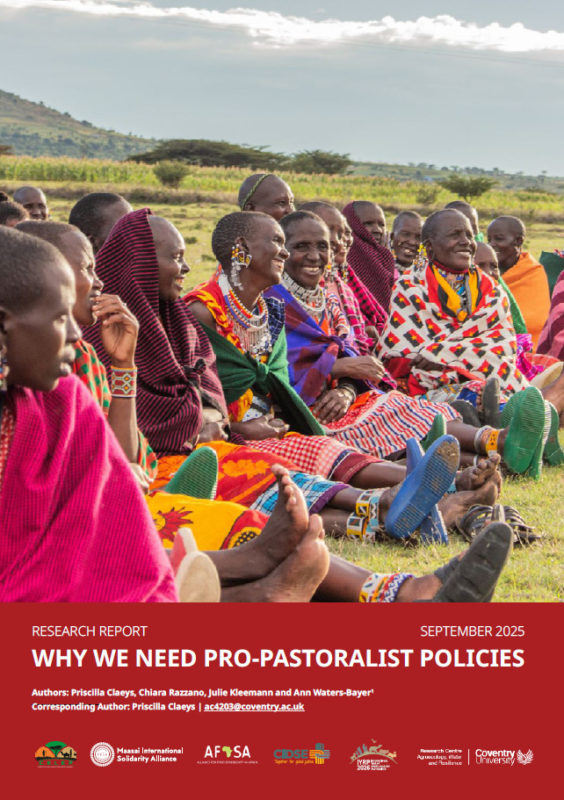
Cover photo: Group of Maasai women. Credit: MISA